
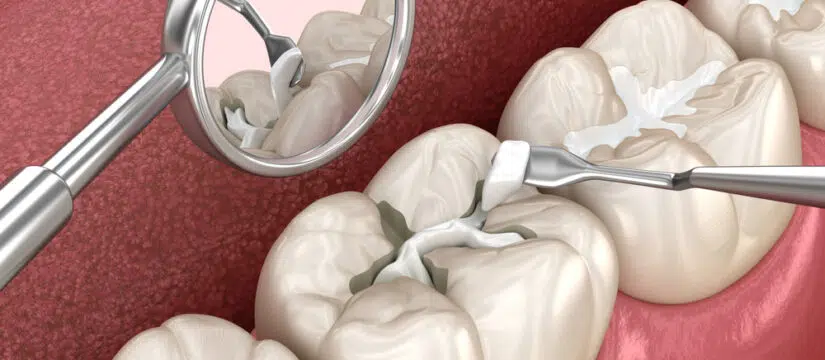
Tooth sensitivity after filling treatment is common. Most of the time this settles by itself. This guide explains why it happens, how long it usually lasts, what you can do at home and when you should contact us.

Quick answer
- Mild sensitivity to cold, hot, sweet foods or biting is common for a few days to a few weeks after a filling.
- It should gradually improve. Sensitivity that gets worse, lingers after the trigger is gone or wakes you at night needs to be checked.
- If your bite feels high or uneven, call us. A quick adjustment often fixes it.
Why is my tooth sensitive after a filling?
- The nerve is irritated. Removing decay, especially deep decay, can temporarily inflame the pulp (nerve) of the tooth.
- The bite is slightly high. If the filling is a fraction too tall, the tooth takes extra pressure when you chew, causing pain on biting.
- Temperature transfer. Some filling materials conduct hot and cold differently to natural tooth.
- A cracked tooth. A crack that was there before, or one that develops, can cause sharp pain when biting or releasing.
- A deeper problem. Occasionally, sensitivity is the first sign that the nerve is not recovering and further treatment is needed.
How long should tooth sensitivity after filling last?
Mild tooth sensitivity after filling usually eases over a few days to a few weeks. The key sign is the trend: if it is slowly getting better, that is usually a good sign. If it is staying the same or getting worse after a couple of weeks, book a review.
Tooth sensitivity after filling: deep vs shallow fillings
How deep the filling is makes a big difference. A small, shallow filling rarely causes more than a day or two of mild sensitivity. A deep filling that sits close to the nerve is more likely to cause sensitivity for longer, because the nerve has been more irritated by the decay and the treatment. Before a deep filling, we will let you know if there is a higher chance of ongoing sensitivity or of needing further treatment later.
What we may do if sensitivity does not settle
- Adjust the bite if the filling is slightly high
- Apply a desensitising treatment or seal the tooth
- Replace the filling or place a sedative dressing to let the nerve settle
- Take an X-ray and test the nerve if an infection is suspected
- Discuss root canal treatment or other options if the nerve cannot recover
Home care tips
- Use a toothpaste for sensitive teeth and brush gently with a soft brush
- Avoid very hot, very cold, acidic or sugary foods and drinks for a few days
- Chew on the other side while the tooth settles
- Over-the-counter pain relief may help; follow the label or ask your pharmacist
When to contact us
- Pain when biting that does not ease after a few days (your bite may need adjusting)
- Pain that lingers for more than a few seconds after hot or cold
- Throbbing pain, pain that wakes you at night, or pain without a trigger
- Swelling of the gum or face, or a bad taste around the tooth
- The filling feels rough, cracked or has come out
Facial swelling that spreads, or difficulty breathing or swallowing, needs urgent care at a hospital emergency department. For urgent dental problems see our emergency dentist Glenmore Park page, and for more on decay see healthdirect: tooth decay.
Fillings at Glenmore Park Dental Services
We explain what to expect before and after your filling, and if anything does not feel right afterwards, we would rather see you early. Learn more about dental fillings in Glenmore Park. Glenmore Park Dental Services is at Shop 17b/11 Town Terrace, Glenmore Park NSW 2745, open Monday to Friday 9:00 am to 6:30 pm and Saturday 8:00 am to 5:00 pm. Call 02 4733 1197 or book online.
This article is general information only and is not a substitute for advice about your own situation. Any dental treatment carries risks; speak with a registered dental practitioner before proceeding.
Frequently asked questions
Is it normal for a tooth to hurt after a filling?
Mild sensitivity to temperature or biting is common for a few days to a few weeks after a filling and usually improves gradually.
Why does my tooth hurt when I bite after a filling?
The most common cause is a filling that is slightly high. A quick bite adjustment usually fixes it, so contact your dentist.
How long does sensitivity last after a filling?
Usually a few days to a few weeks. If it is not improving after about two weeks, or it is getting worse, book a review.
When is pain after a filling a problem?
Lingering pain after hot or cold, throbbing pain, pain that wakes you at night, or swelling can mean the nerve is inflamed or infected and needs to be checked.